Bianca Bauer · 23 September 2026
Vinara's Forgotten Manuscript Archives Draw Scholars to Decode Lost Trade Legends
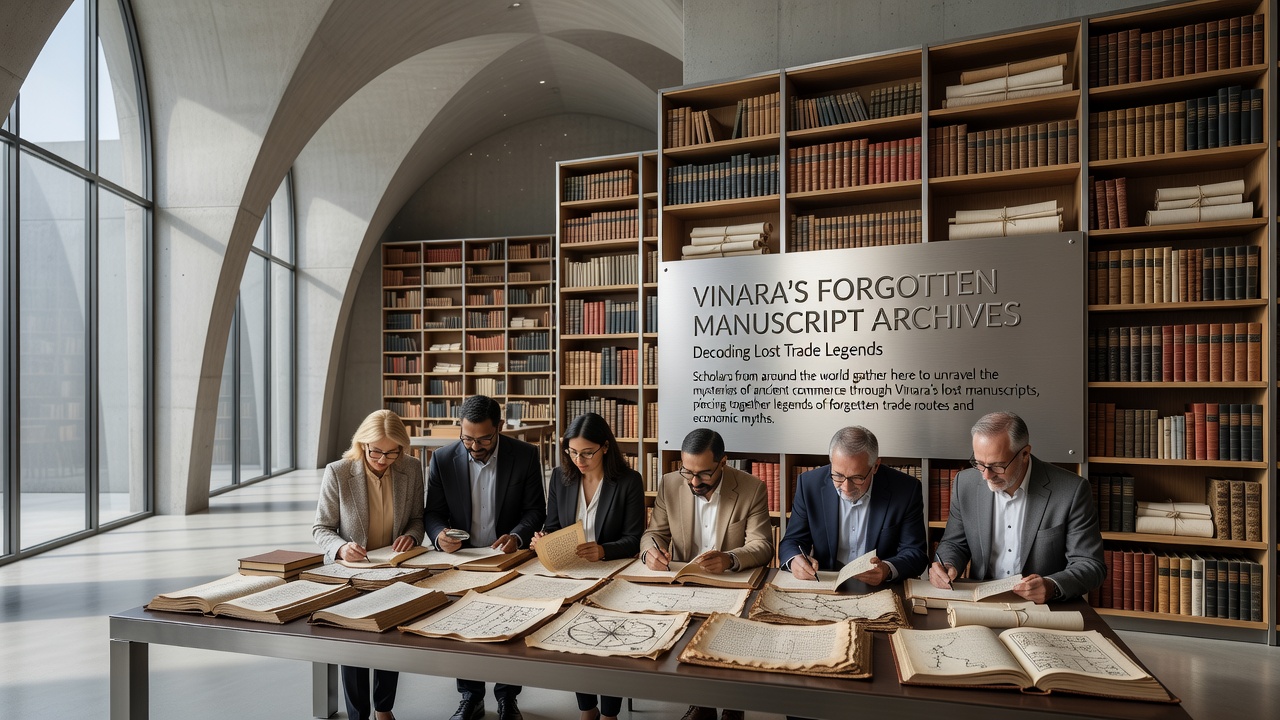
Vinara's manuscript archives sit tucked away in a series of climate-controlled vaults beneath the historic town hall, where rows of leather-bound volumes and rolled parchments have remained largely untouched for decades until recent cataloging efforts brought them back into focus. Researchers from multiple continents have started arriving to examine these materials, which contain references to trade networks that once connected Mediterranean ports with inland routes through what is now northern Italy, and the documents detail exchanges of goods that include wine, spices, textiles, and metals across centuries that span from the late Roman period into the Renaissance.
Origins and Rediscovery of the Archives
The collections began as private donations from local merchant families in the 1700s, and they grew through acquisitions by the regional historical society before transferring to municipal care in the mid-20th century. Archivists completed a full inventory only in 2023, which revealed previously uncatalogued bundles that reference specific trading partners and shipping manifests tied to legendary routes whose locations had faded from modern maps. One set of ledgers lists transactions involving barrels marked with symbols that match descriptions in separate narrative accounts of hidden storehouses along alpine passes, and cross-referencing these entries with port records from Genoa and Venice has already clarified several previously disputed dates for commercial activity in the region.
Decoding the Trade Legends
Scholars working on the materials focus on a core group of texts that blend practical accounting with storytelling elements, where detailed lists of cargo sit alongside accounts of storms, rivalries, and coded warnings about competitors. These legends appear to encode real geographic and logistical information, such as seasonal wind patterns that affected sailing schedules or markers for safe harbors that later generations forgot after roads replaced sea lanes. Teams have identified repeated mentions of a "vine road" whose description aligns with soil samples and terracing remains still visible in certain valleys outside Vinara, and linguistic analysis shows the terminology mixes Latin, early Italian dialects, and occasional Greek loanwords that point to broader eastern Mediterranean contacts.
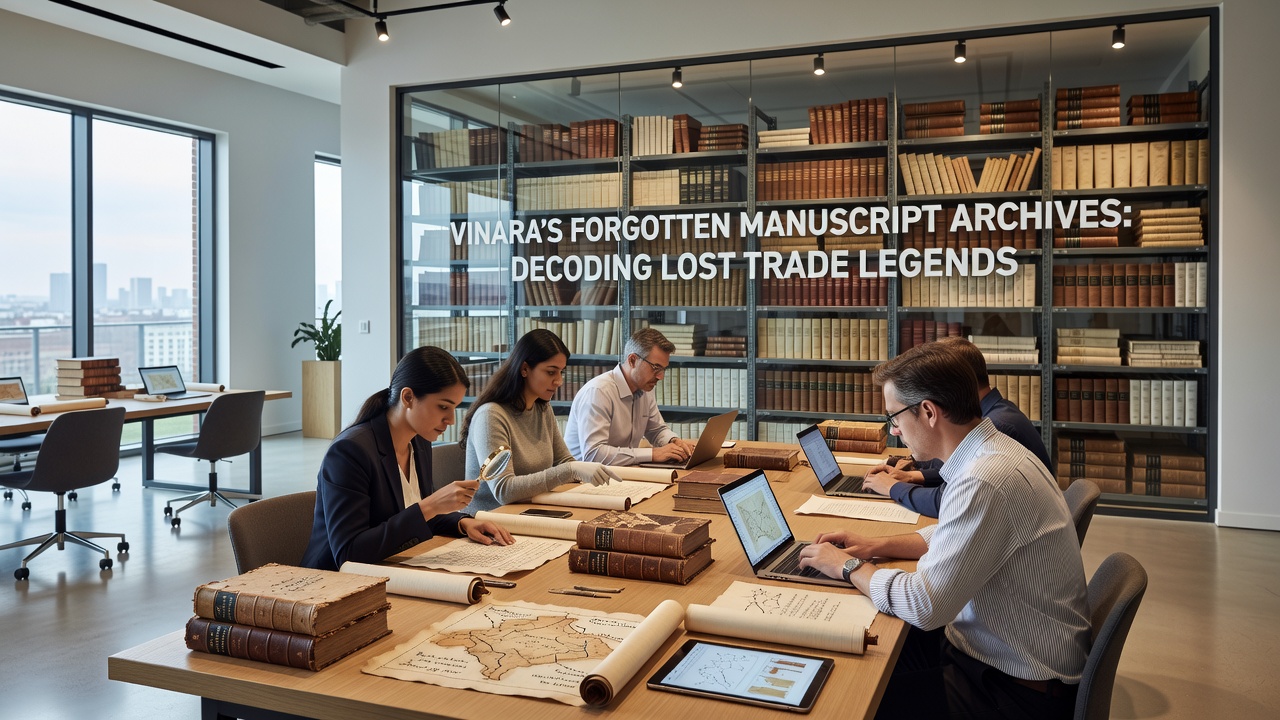
Digital imaging and multispectral scanning now allow researchers to read faded ink passages that were illegible under normal light, and these techniques have uncovered additional layers of marginal notes that record corrections to earlier entries or private comments on the reliability of certain trading partners. One manuscript in particular contains a fold-out map sketched in ink that shows distances marked in days of travel rather than kilometers, and its annotations match entries in a separate account book that lists payments made to guides operating along the same paths. Universities in Italy and abroad have begun collaborative projects to transcribe and translate the full set, while a 2024 pilot study funded through the European Research Council established baseline dating for several key documents using carbon analysis and watermark identification.
Current Research Projects and International Collaboration
Groups from institutions across Europe, North America, and Australia coordinate through shared online platforms where high-resolution scans are stored alongside metadata that tracks every reference to goods, routes, and individuals. Data from these efforts feed into larger databases maintained by the National Library of Australia on historical commerce patterns, which helps place Vinara's records within a global context of pre-modern exchange systems. Another partnership links the local team with the Canadian Heritage research network, whose specialists contribute expertise in parchment conservation and digital preservation techniques that protect the originals while expanding access for remote scholars.
Workshops held in Vinara during the past year have drawn participants who compare the manuscript data against archaeological finds from harbor sites in Croatia and southern France, and preliminary results indicate that certain trade volumes described in the ledgers exceed previous estimates based solely on surviving port logs. These comparisons also highlight how local producers adapted packaging and labeling methods to meet demands from distant markets, details that survive only in the narrative sections of the Vinara documents.
September 2026 Symposium and Future Access
Plans are underway for an international symposium set for September 2026 that will bring together historians, linguists, and digital humanities specialists to present findings from the ongoing transcription work. The event, hosted by the Vinara municipal archives in partnership with the University of Padua, will include public exhibitions of selected manuscripts alongside discussions of new methodologies for interpreting mixed-genre historical texts. Organizers expect the gathering to accelerate publication of annotated editions and to open additional funding channels for long-term preservation of the full collection.
Conclusion
The Vinara manuscript archives continue to yield information that refines understanding of medieval and early modern trade systems, and the combination of traditional archival methods with modern imaging and data-sharing tools has made previously inaccessible details available to a widening circle of researchers. As transcription and analysis progress, the documents offer concrete evidence that connects local economic activity to broader networks spanning multiple seas and mountain ranges, while the legends embedded within the ledgers provide practical clues that align with physical and documentary records from other regions.