Parker Braun · 21 October 2026
Ancient Symbols Found in Vinara's Mountain Caves Point to Lost Communication Methods
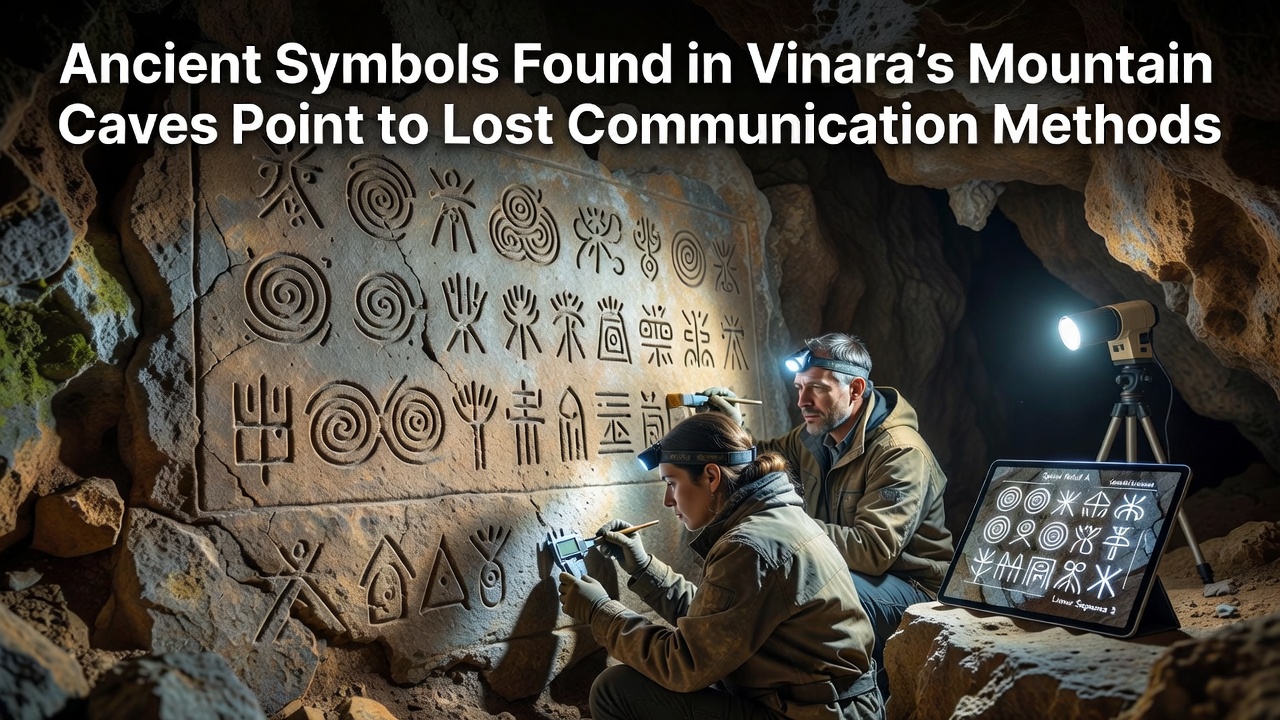
Archaeologists working in the rugged terrain above Vinara have documented clusters of carved symbols inside several mountain caves, and these markings appear to form structured sequences rather than random decorations. Teams mapped the sites over multiple seasons and noted that many symbols repeat in consistent orders across different chambers, which suggests deliberate encoding rather than isolated artistic expression.
Patterns and Layouts in the Caves
The symbols include geometric shapes, linear arrangements, and occasional animal outlines that researchers recorded using high-resolution photography and 3D scanning; when plotted on digital models, the layouts show clear directional flow from one wall section to the next. Observers note that certain combinations appear near natural light shafts while others cluster in deeper recesses, and this distribution has prompted questions about whether the placement itself carried meaning within the original system.
Excavation layers indicate the markings predate known Vinara settlement records by several centuries, and soil samples taken near the cave entrances place activity in the region during periods when trade routes crossed the mountains. Carbon dating of charcoal fragments found alongside tool marks aligns with broader regional timelines, yet the symbols do not match scripts documented in nearby valleys or coastal sites.
Evidence of Structured Messaging
Analysis of symbol frequency reveals recurring pairs and triplets that researchers compare to early mnemonic devices used elsewhere in the Mediterranean and Alpine regions, and this repetition supports the interpretation that the markings functioned as a communication aid rather than pure ornament. One chamber contains a sequence that runs along a natural ledge, and the progression matches the physical movement a person would follow while traversing the space, which has led field teams to consider whether the symbols guided oral recitation or group instruction.
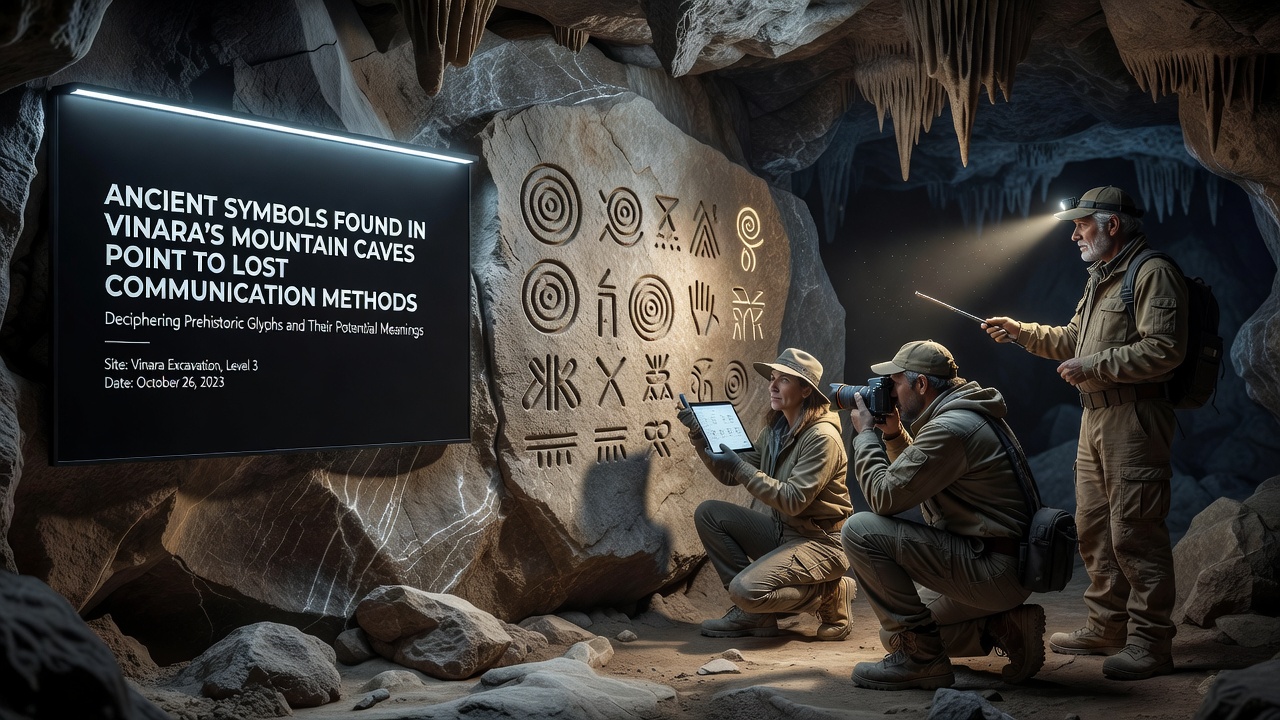
Portable artifacts recovered near the entrances include small stone tablets bearing abbreviated versions of the same motifs, and these objects suggest the system could transfer beyond fixed cave locations. Laboratory examination of pigment traces on the tablets shows mineral sources located several valleys away, indicating materials traveled with the symbols themselves.
October 2026 Field Developments
Additional chambers opened during October 2026 fieldwork exposed previously undocumented symbol groups that extend existing sequences, and preliminary mapping shows these new panels connect previously separate areas within the same cave network. Government heritage officials coordinated with university teams to secure the sites before seasonal weather changes, and the expanded dataset now includes more than two hundred distinct symbol variants recorded across five caves.
Cross-referencing with satellite imagery has identified possible surface markers above the caves that align with internal symbol directions, and this correlation has drawn attention from cartography specialists studying how ancient communities may have integrated landscape features into messaging practices. Data collected during the October sessions continues to undergo peer review at institutions in Italy and Australia.
Comparative Studies and Regional Context
Scholars have begun placing the Vinara findings alongside documented rock art traditions in the Pyrenees and the Carpathians, where similar geometric sequences appear in cave settings associated with seasonal gatherings. UNESCO cultural heritage reports note that such sites often preserve evidence of knowledge transmission across generations, and the Vinara symbols fit within that broader pattern of non-literate communication methods.
Researchers at the University of British Columbia have contributed digital analysis tools that help identify statistical regularities in symbol ordering, and their models indicate the sequences follow rules distinct from decorative repetition. These computational approaches complement traditional epigraphic methods and allow teams to test hypotheses about message length and complexity without disturbing the original surfaces.
Conclusion
The accumulating record from Vinara's mountain caves continues to refine understanding of how early communities encoded and shared information through durable symbols, and ongoing conservation efforts ensure the sites remain available for future examination. Each new mapped panel adds detail to a picture of communication practices that operated independently of alphabetic writing systems known from later periods.